
This is the latest post in my “12 Things Everyone Should Know” series. You can access the full collection here.
A few years ago, the behavioral ecologist Dan Baldassarre submitted a joke science article to a predatory journal, curious to see if they’d publish it. They did. The paper was called “What’s the Deal with Birds?” and it was hilarious. Here’s the abstract:
Many people wonder: what’s the deal with birds? This is a common query. Birds are pretty weird. I mean, they have feathers. WTF? Most other animals don’t have feathers. To investigate this issue, I looked at some birds. I looked at a woodpecker, a parrot, and a penguin. They were all pretty weird! In conclusion, we may never know the deal with birds, but further study is warranted.
It was a brilliant spoof, exposing the journal’s lack of rigor. But it also got me thinking: What IS the deal with birds? In many ways, they’re quite bizarre creatures, at least by mammalian standards.
In this post, I’d like to share 12 weird and wonderful facts about our feathered friends that, in my view, every living human should know. We’ll look at how smart they are, how they survive in the wild, how they attract mates, how they risk their lives for their kids - and how some outsource their parenting to other species. Hope you enjoy reading it as much as I enjoyed putting it together!
1. Birds are dinosaurs.
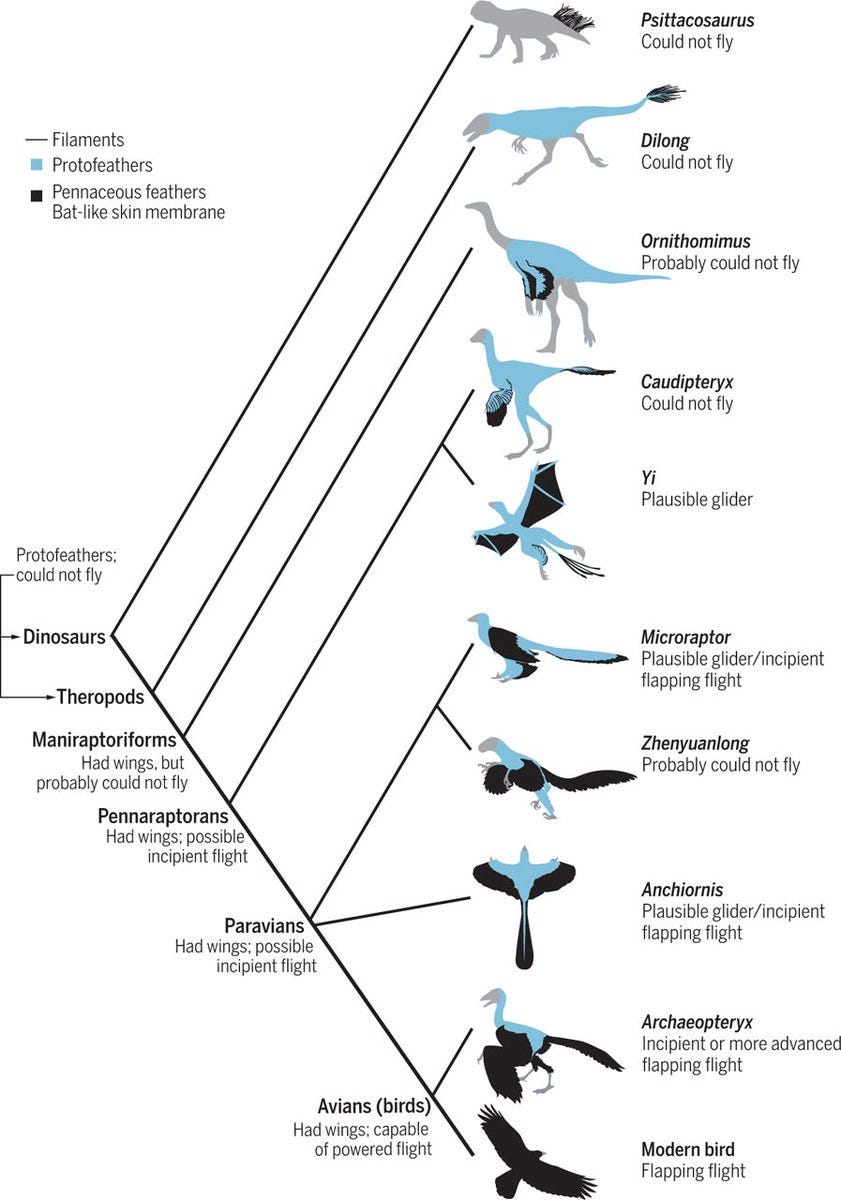
I’ve known this for ages, but I still think it’s cool: Birds are dinosaurs. They’re the one group of dinosaurs that didn’t go extinct after of the asteroid 65 million years ago.
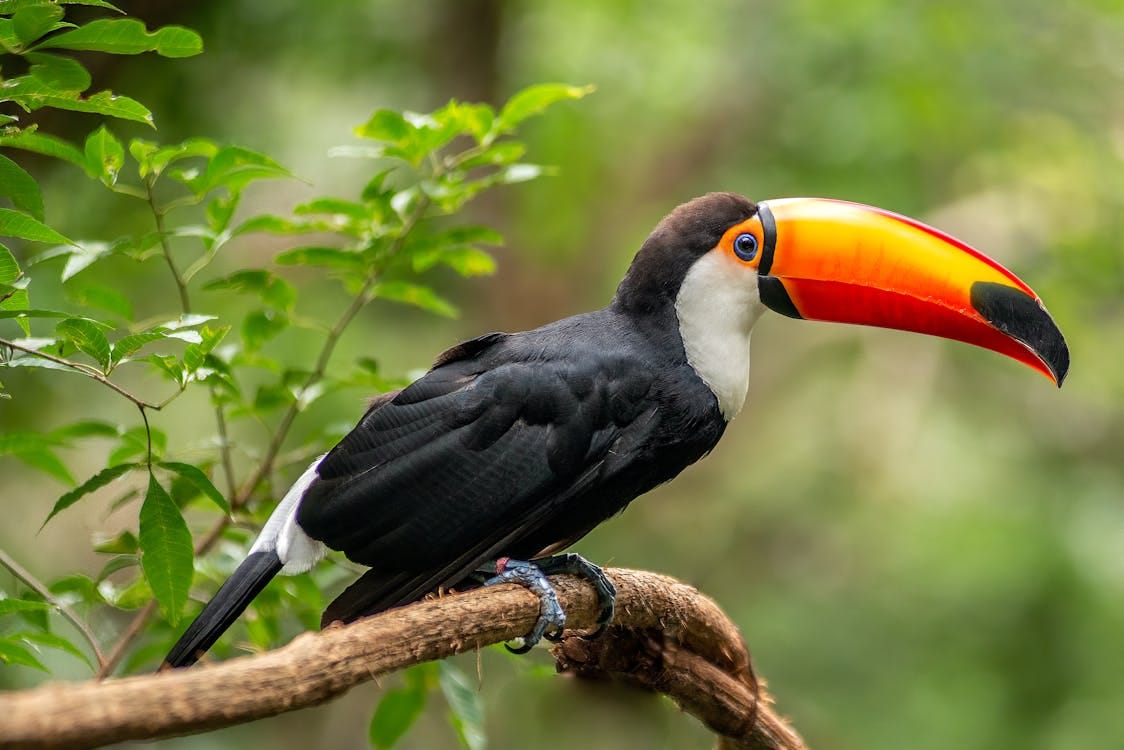
It’s not so hard to believe that birds are dinosaurs when you see this amazing creature (a shoebill).
2. Some birds are smart - really smart.
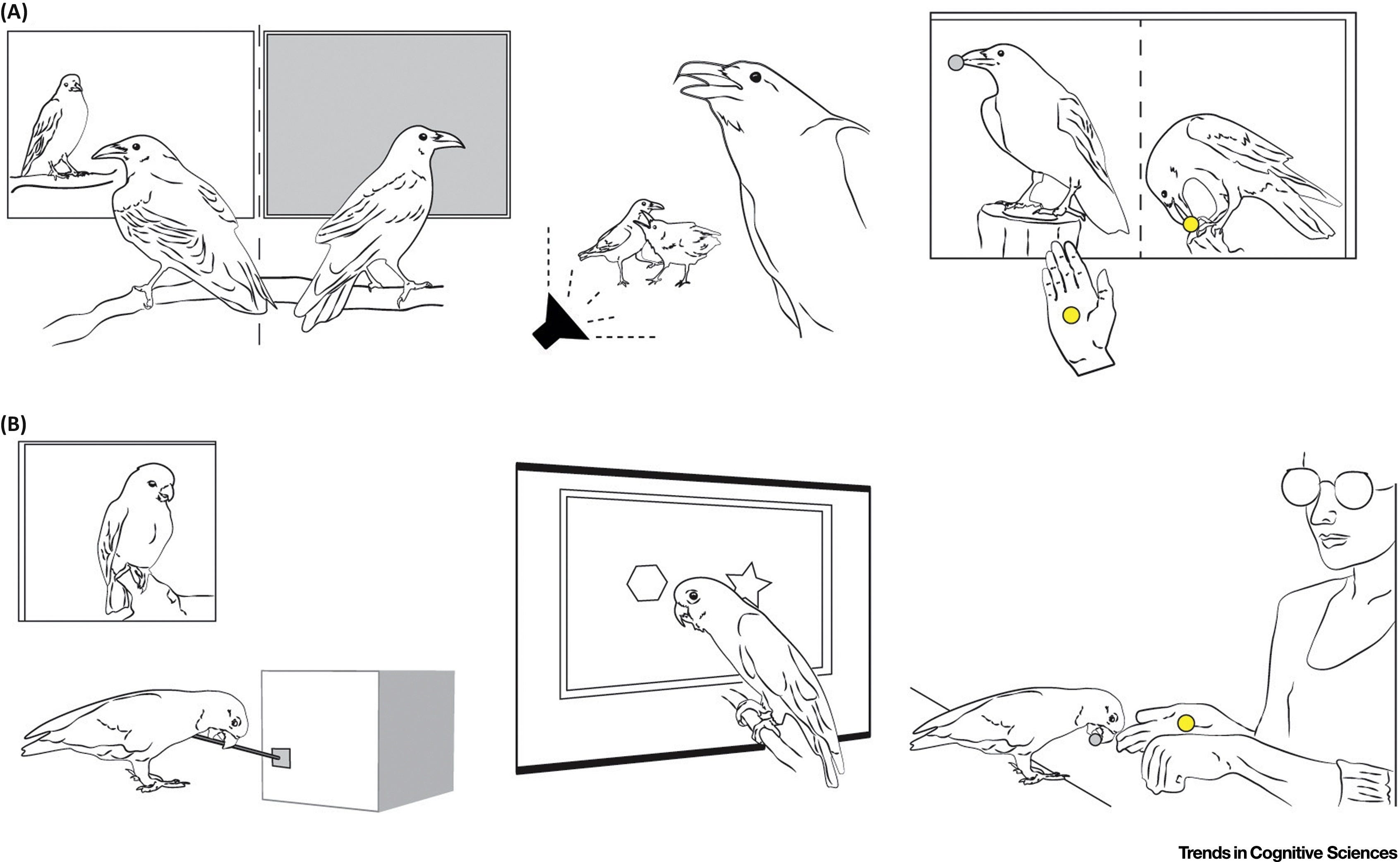
For a long time, people thought birds were, well, “bird-brained.” It turns out, however, that some birds - in particular, parrots and corvids (crows, ravens, etc.) - are extremely intelligent, with cognitive abilities rivalling those of primates. According to one fascinating paper, these abilities include “delay of gratification, mental time travel, reasoning, metacognition, mirror self-recognition, theory of mind, and third-party intervention.”
3. Some birds understand cause and effect.
Here’s a stunning example of corvid intelligence: a New Caledonian crow figures out how to use water displacement to retrieve an out-of-reach treat. This kind of cause-and-effect understanding is rare in the animal kingdom.
4. Some birds play.
Play isn’t unique to human beings, or even to mammals. It’s common in intelligent species - including many birds. Here’s a great example: a pair of ravens playing in the snow.
5. Bird brains are densely packed with neurons.
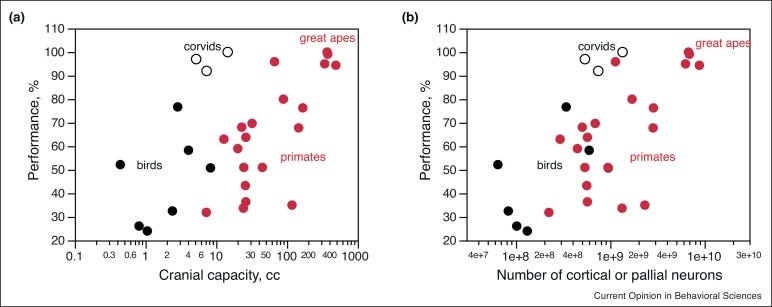
Birds have smaller brains than most primates. How, then, do they achieve their primate-level smarts?
One suggestion is that they’ve got primate-like numbers of neurons squeezed into their tiny bird brains. As one paper put it, “absolute numbers of neurons in the mammalian cerebral cortex, or in the bird pallium, are good correlates of cognitive diversity: the more the neurons, regardless of brain or body size, the better a species performs at a same task.”
6. Birds think without a cortex.
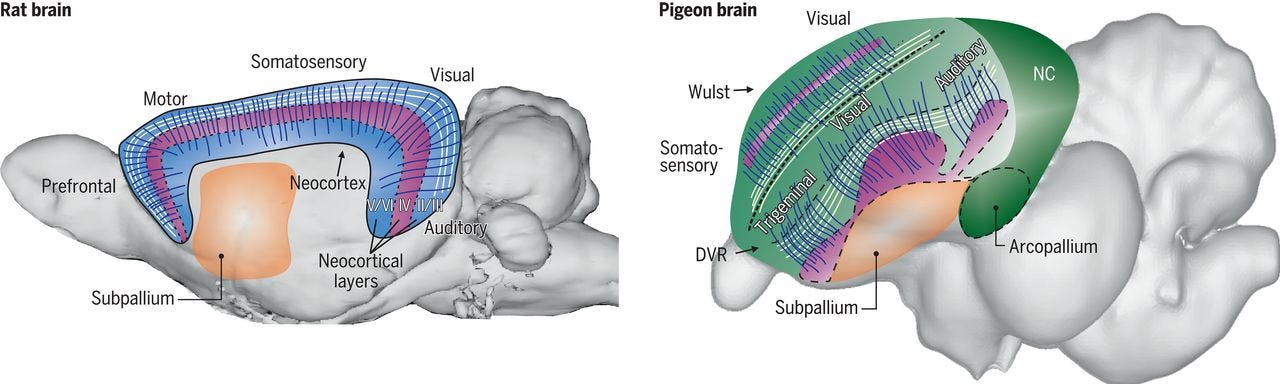
In mammals, intelligence is largely a function of the cerebral cortex. Birds, however, don’t have a cerebral cortex. Their intelligence is implemented instead in an area of the brain called the pallium.
Note that this is a good example of how the same cognitive functions can be instantiated in different ways in different brains – and thus of why we could never replace mentalist terms with brain-level descriptions.