



Same-sex sexual orientation is a genuine evolutionary mystery. Traits that reduce reproduction are not supposed to persist - yet homosexuality does.
How?
In this excerpt from my book A Billion Years of Sex Differences, I explore the latest scientific answers to this question. Along the way, I dismantle some persistent myths, explain why same-sex orientation is neither a product of socialization nor an evolved adaptation, and argue that the best evidence points to a surprising conclusion: that sexual orientation is biological but largely non-genetic.
You can access the full collection of excerpts here, and pick up a copy of the book here.
Nature’s Rainbow
Let’s wrap up the discussion of sex differences in sexual psychology by exploring the question I’m most often asked when I give talks on the topic: Why are some people exclusively attracted to members of their own sex?
Heterosexuality is no mystery in evolutionary terms. Its primary function is clearly about making new life, and secondary functions – such as galvanizing the bond between potential parents – are just as clearly linked to the primary function. As soon as we put on our Darwinian goggles, however, homosexuality starts to seem mysterious. The mystery is not that individuals sometimes engage in sexual activity with members of the same sex; the occasional same-sex dalliance is unlikely to have much impact on the number of children one has in one’s lifetime. The mystery is that a non-trivial number of people never want to have sex with members of the other sex. Individuals with such a profile might occasionally have children, especially in societies with strong social pressure to marry and have a family. More than likely, though, they’ll have fewer children than people with a heterosexual (or at least a bisexual) orientation. This is especially true of men, because of men’s higher maximum offspring number.
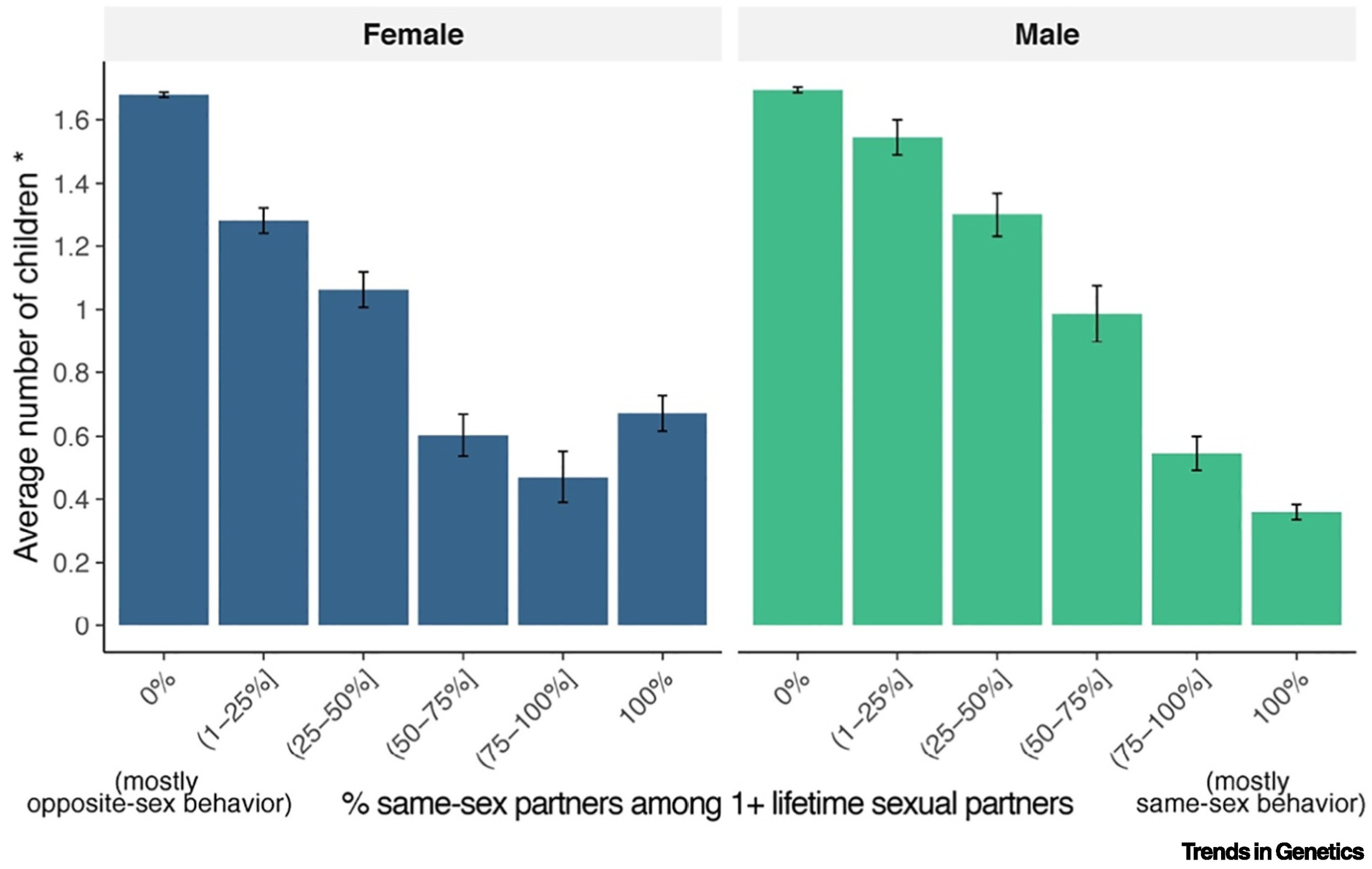
How, then, does homosexuality persist? To the extent that it’s genetic, why hasn’t selection removed the genes contributing to its development from the gene pool? To the extent that it has non-genetic causes, why hasn’t selection made the development of heterosexuality more robust to perturbations?