

In Case You Missed It…
Some sex differences appear within hours of birth. Others emerge later in life. Still others are shrinking across the generations. The science of sex differences is full of surprises - and rarely fits neatly into anyone’s preferred worldview.
In this post, I’ve rounded up 12 fascinating findings on the differences between men and women. We’ll explore sex differences in personality, emotional intelligence, morality, political attitudes, and taste in movies. And we’ll ask: Are children’s stereotypes of the sexes misleading social myths, or do they tend to be fairly accurate? Why do women often report greater job satisfaction despite having worse jobs? And if men have larger brains, does that mean they have higher IQs?
1. Sex Differences in the Desire for a Mate with Resources
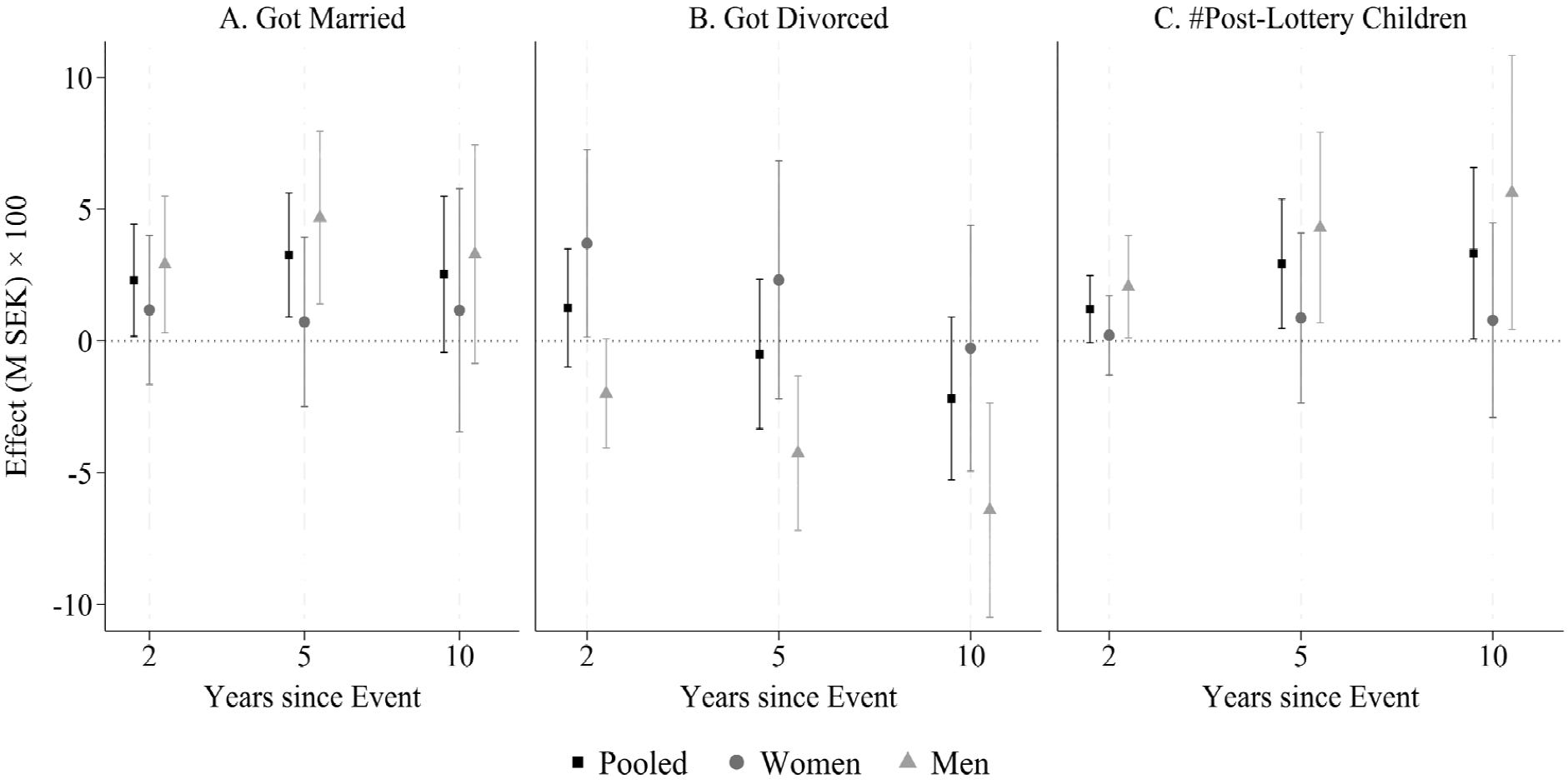
A classic claim in evolutionary psychology is that women place more weight than men on a long-term mate’s resources. Is this true? A new study adds to the large body of research suggesting that it is. Analyzing data from more than 70,000 Swedish lottery players, the authors found that, for single men, a large win boosted their chances of getting married in the next five years by around 30%. For single women, in contrast, there was no clear effect - and for married women, a big win initially increased the chances of divorce.
2. Sex Differences in Face Gazing in Newborns
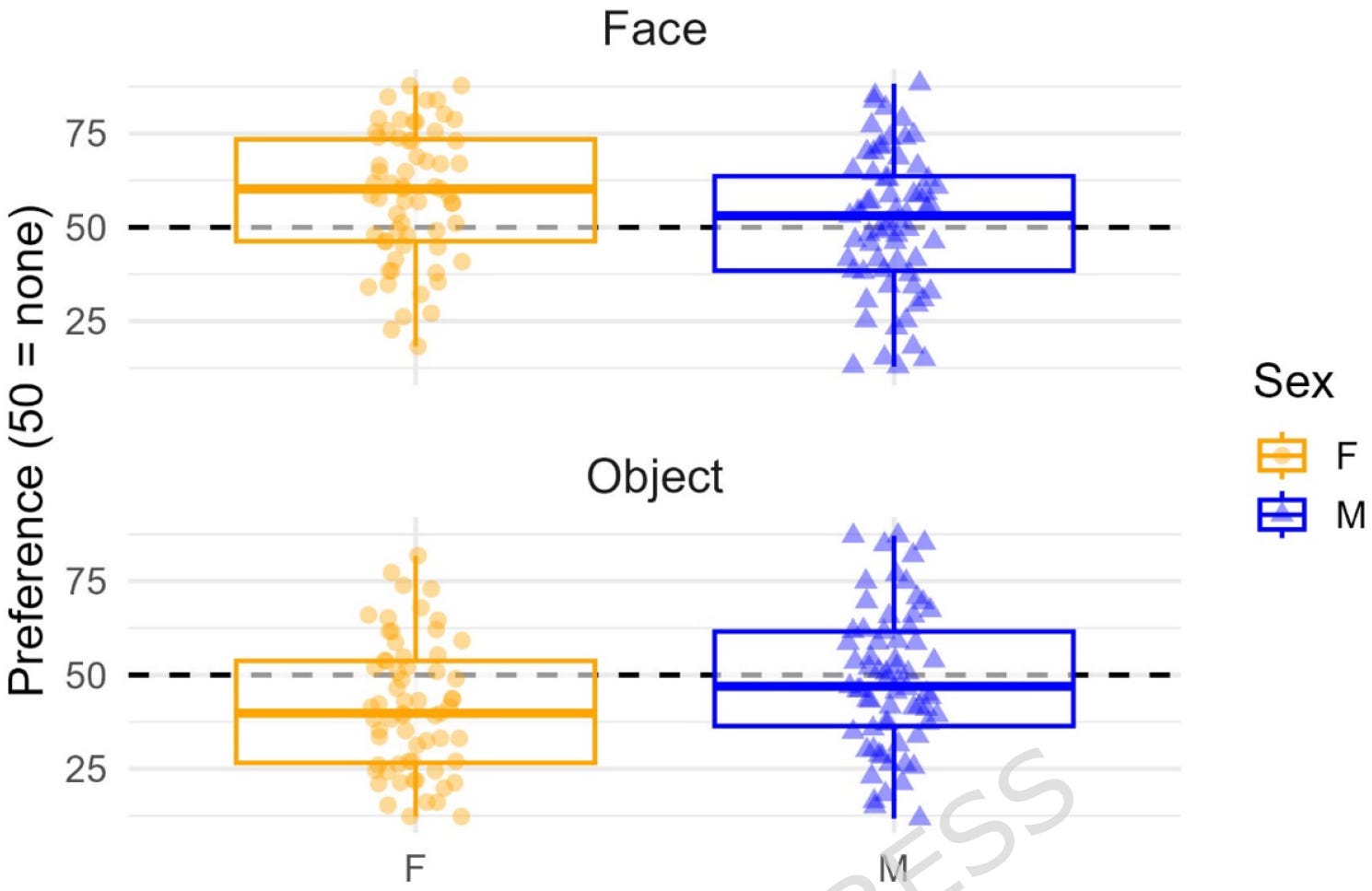
A famous 2000 study found that newborn girls were more interested in a face than a mechanical object, whereas newborn boys showed the opposite pattern. Because this difference emerged long before socialization was a realistic explanation, the finding suggests that the difference has an innate basis. The study was widely discussed, praised, and criticized. Surprisingly, however, for the next quarter-century, no one attempted to replicate it.
A new paper from Yumnah Khan and colleagues has finally taken on that task. The researchers found that, at an average age of just 33 hours, newborn girls spent more time gazing at a face than a non-social object, whereas boys showed no clear preference.
This adds further support to the idea that certain sex differences in attention have prenatal origins. If the face-gaze difference reflects greater social interest, it could help explain later sex differences in social skills and language abilities.