


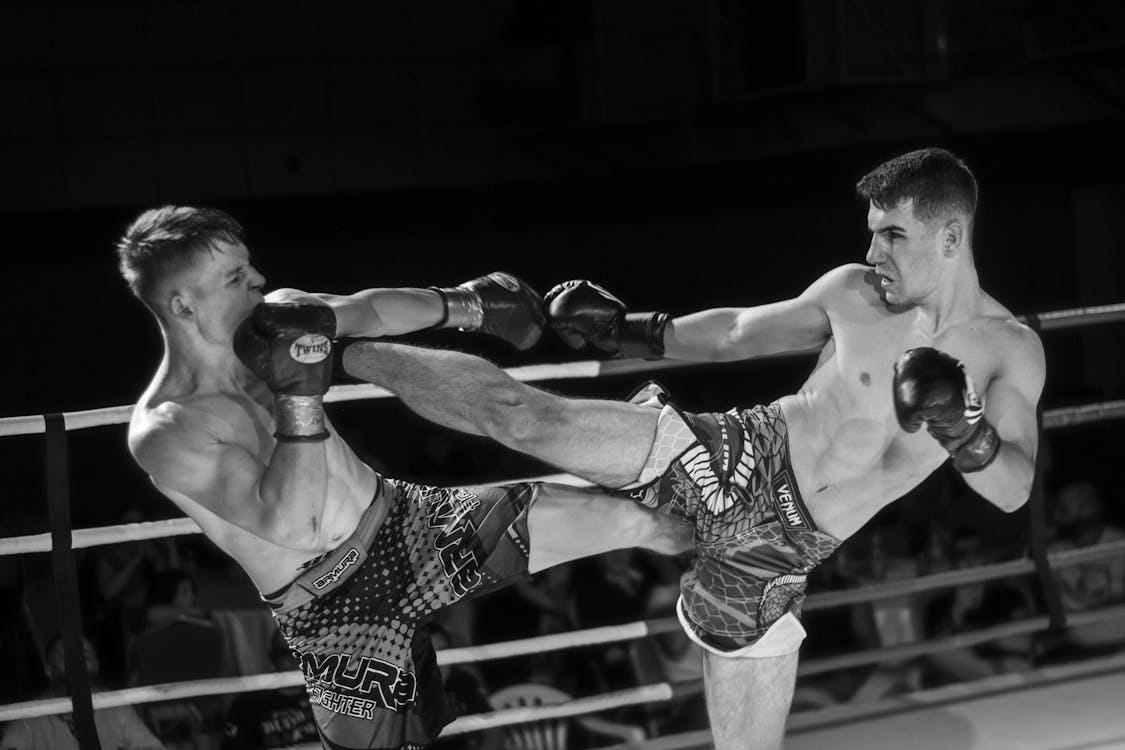
[I]f modern Western societies had homicide rates as high as some foraging peoples, a male graduate student would be more likely to be killed than to get a tenure-track position.
Throughout the animal kingdom, fighting is a big deal. Animals fight for food, for territory, for status, rank, and mates. For males in particular, the ability to fight is often a prerequisite for passing on one’s genes. As a result, in many species, natural selection has crafted physical and psychological adaptations for combat, especially among the males.
Yet despite the obvious importance of fighting in other species, social scientists have paid surprisingly little attention to this variable in human beings. Part of the reason may be that fighting isn’t particularly important for most social scientists. Violence is far rarer today than it was throughout most of human history, which may tempt us to underestimate its importance in shaping the evolution of our species.
In a fascinating 2012 paper in Human Nature, Aaron Sell, Liana Hone, and Nicholas Pound set out to correct this oversight. They argued that violence was a pervasive and consequential feature of ancestral human life, and that it left a deep imprint on the human body and mind. Violence, they suggest, was especially important for men - a fact that explains a wide range of sex differences, from men’s larger muscles and greater propensity for aggression to their finely tuned capacity to size up other men’s fighting abilities.
In this post, I’ll explore various physical and psychological adaptations for fighting in our species, and how they differ between the sexes.