



A large literature in social psychology shows that education is generally associated with lower levels of prejudice. A fascinating paper by P. J. Henry and Jaime Napier, however, uncovered a glaring exception. They found that, although education is associated with decreased racial prejudice, it’s associated with increased political prejudice.
You might assume that, because universities generally lean left politically, this means that educated people are more biased against conservatives. But it’s more complicated than that. As the following graph illustrates, among liberals, more education is associated with a stronger preference for liberals over conservatives - but among conservatives, it’s associated with a stronger preference for conservatives over liberals.
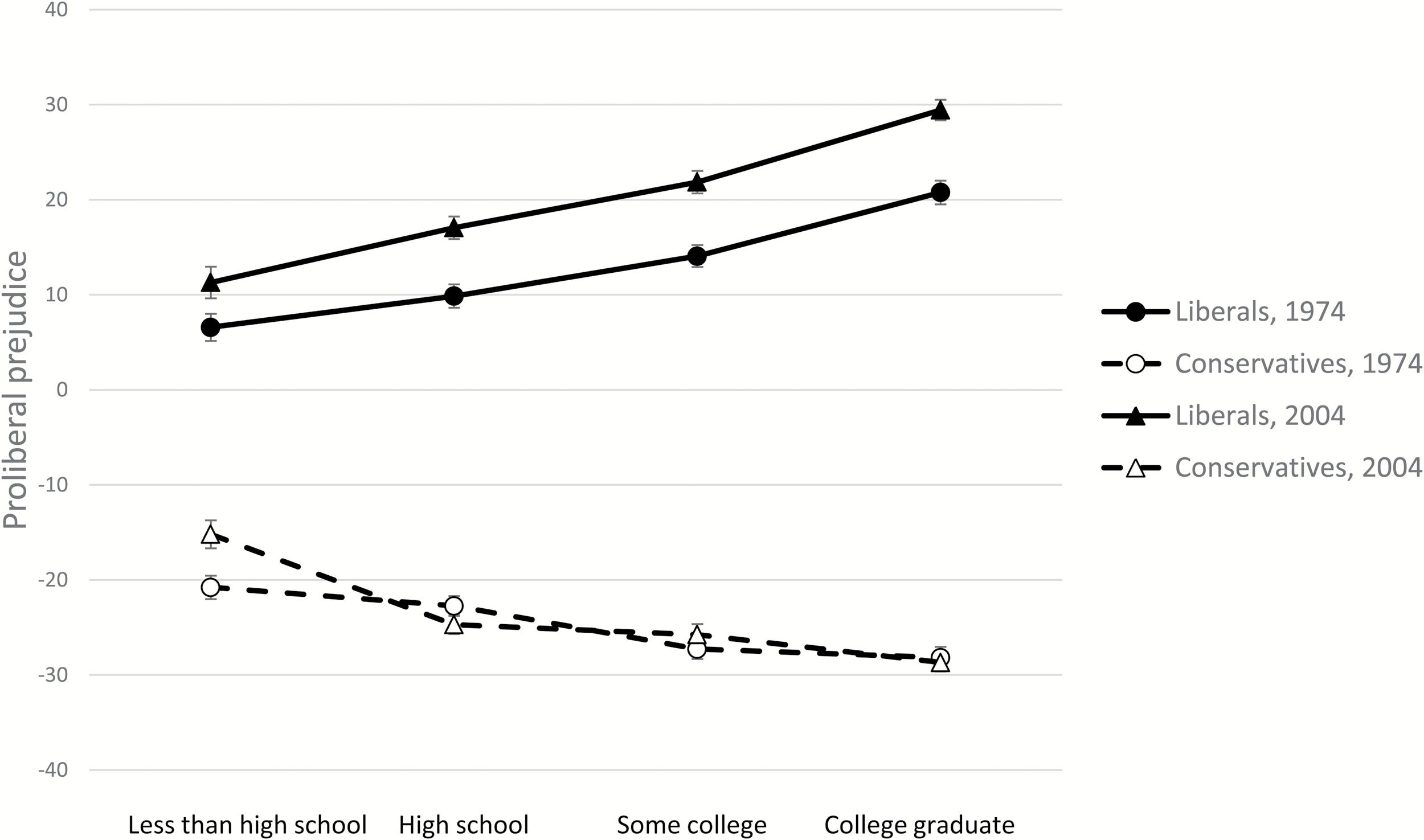
Notice that the strength of the link between education and political favoritism barely changed between 1974 and 2004, even though political ingroup favoritism increased markedly among liberals during that time.
Not only is education linked to greater political ingroup favoritism, but the stronger one’s ideological leanings, the stronger the link tends to be. As we see in the next graph, education is most strongly linked to pro-liberal favoritism among extreme liberals, and most strongly linked to pro-conservative favoritism among extreme conservatives. Moderates, in contrast, show little variation in favoritism across different levels of education.
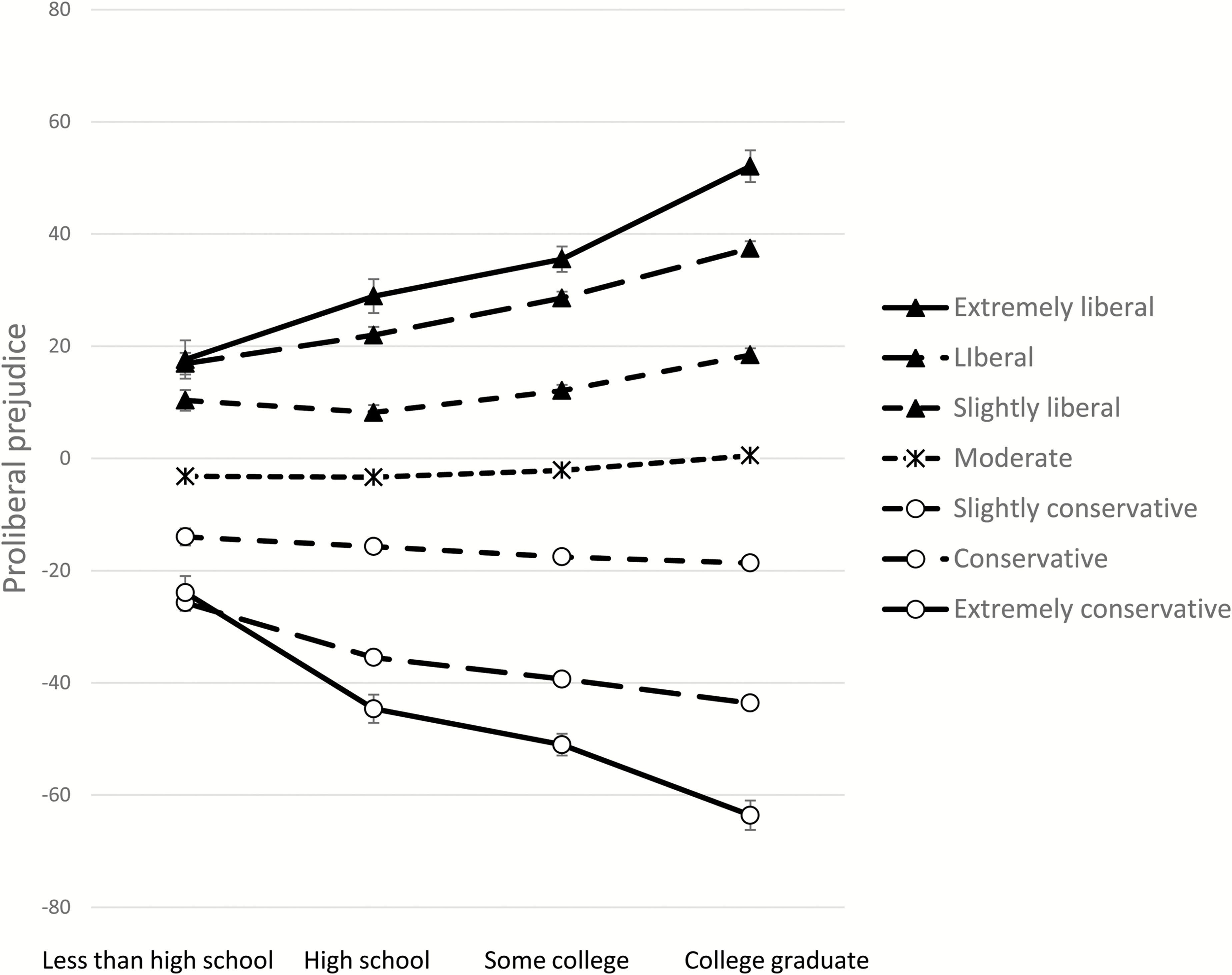
As Henry and Napier point out, these findings challenge the common claim that education promotes tolerance toward those who are different from ourselves. It seems to do so for race, but not for political ideology.
Why might that be? The researchers suggest that education helps people clarify their beliefs, and connect those beliefs more firmly to their moral values. This could make their own ideological side seem more attractive - and the other side seem more threatening.
If so, we might also expect education to increase ingroup favoritism in disputes between secularists and religious believers, pro-life and pro-choice advocates, and feminists and gender-role traditionalists. This hypothesis, however, remains to be tested.
You can read the full paper here or request a copy from the authors here.
Follow me on Twitter/X for more psychology, evolution, and science.
Upgrade to a Paid Subscription
To help support my work, please consider upgrading to a paid subscription. A paid subscription will get you:
Full access to all new posts and the archive
Full access to my “12 Things Everyone Should Know” posts, Linkfests, and other regular features
The ability to post comments and interact with the N3 Newsletter community
Thanks!
Steve
Related Reading From the Archive
12 Things Everyone Should Know About Political Psychology

This is the latest post in my “12 Things Everyone Should Know” series. You can access the full collection here.