



Evolutionary mismatch is one of the most useful concepts in evolutionary psychology. The basic idea is that the modern world is very different from the world in which we evolved, and thus that we’re misaligned with our environment in various ways. A fascinating new paper by Jose Yong and colleagues applies this idea to some of the biggest psychological challenges of modern life, and argues that the stress, loneliness, and status anxiety that many of us experience are partly the result of mismatch.
The paper’s main ideas can be summed up in two graphs and one table.
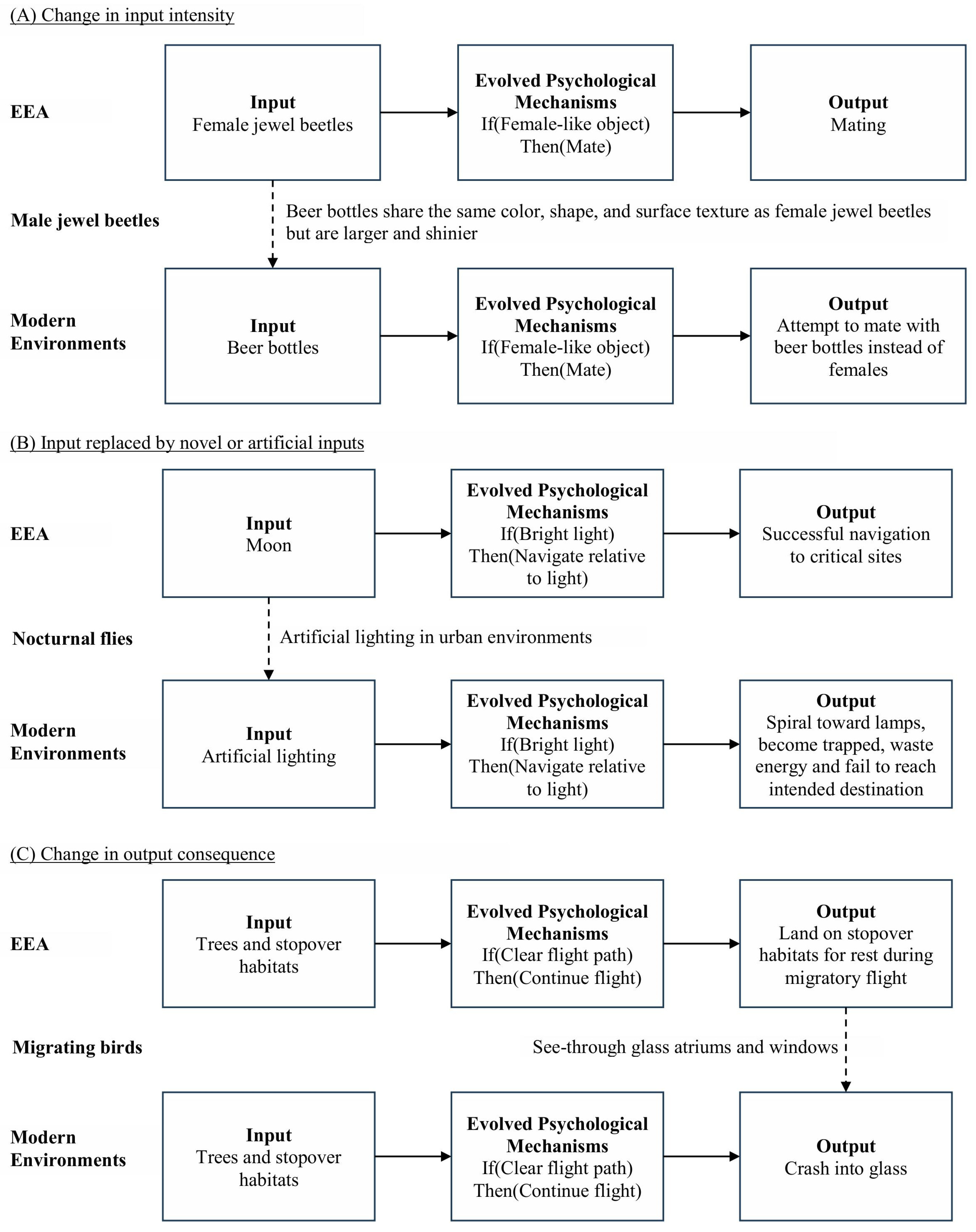
Graph 1: Three Types of Mismatch - Animal Edition
The first graph shows three types of evolutionary mismatch seen in other species. (Note that EEA stands for environment of evolutionary adaptedness - that is, the environment to which a species is primarily adapted.)
Graph 2: Three Types of Mismatch - Human Edition
The second graph gives human examples of each type of mismatch - examples that harm our romantic lives, our health, and social cohesion.
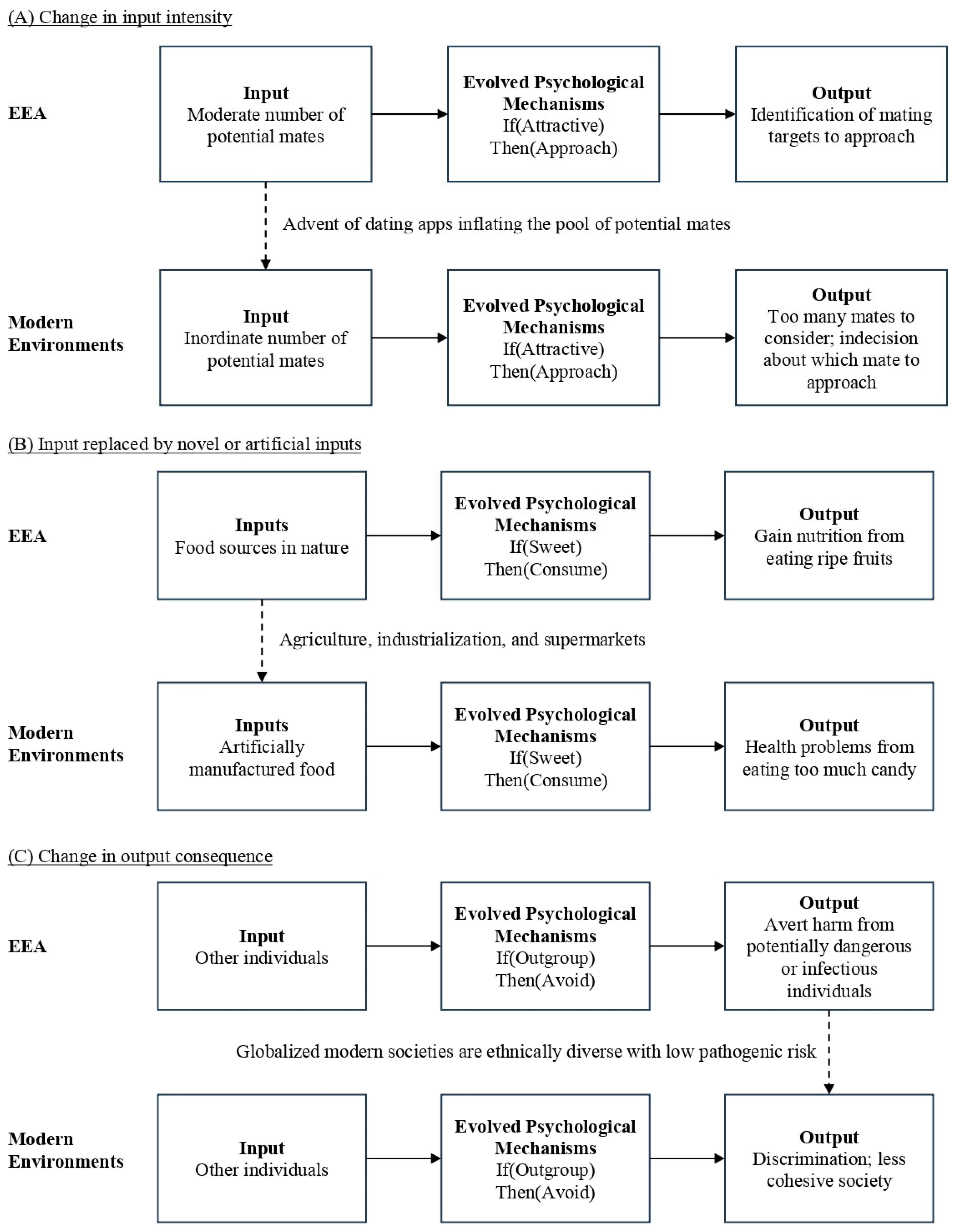
Table 1: A Catalogue of Mismatches
Finally, the table below lists various examples of evolutionary mismatch that contribute to the stresses and strains of modern life.
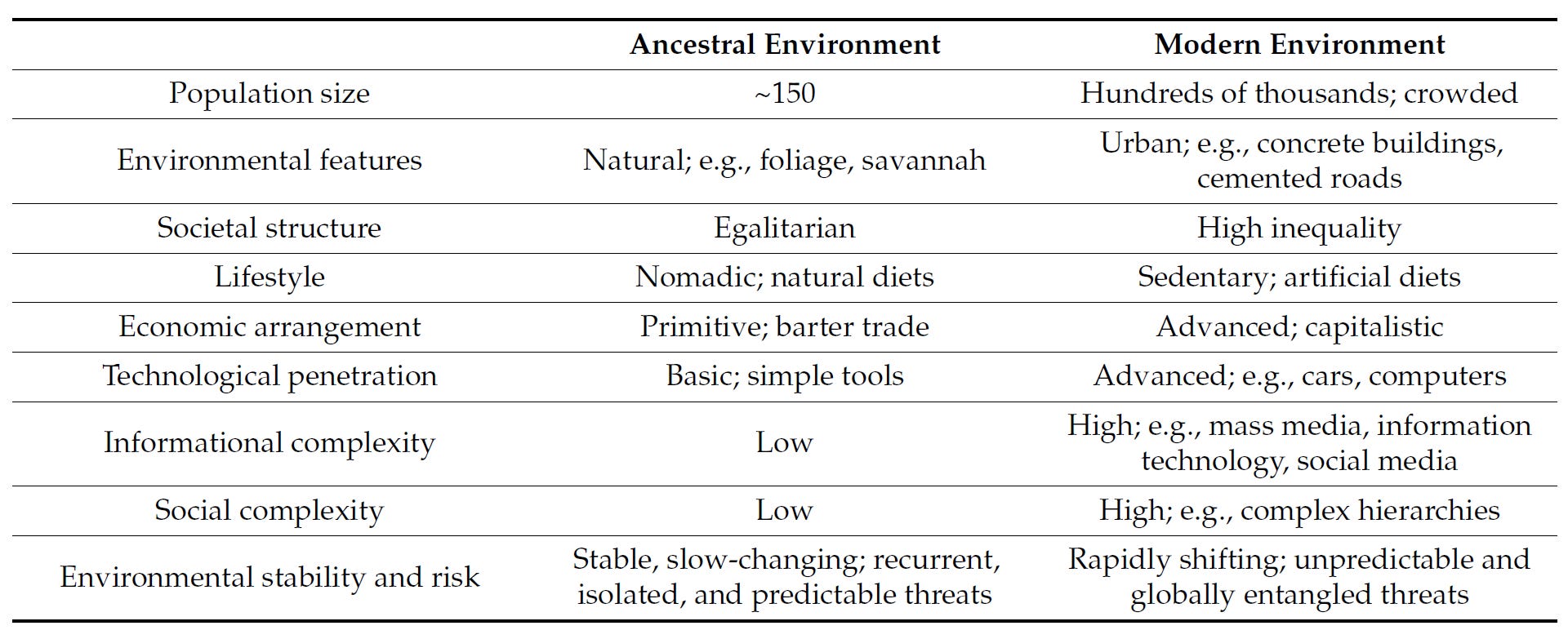
The table is really the core of the paper’s argument. According to Yong and colleagues, many of the aches and pains of modern life can be traced in part to these mismatches. Large cities, inequality, and complex social hierarchies ramp up status competition, stress, and loneliness. Artificial environments and sedentary lifestyles undermine health and well-being. Screens, social media, and information overload bombard us with more stimulation and information than we evolved to handle. And 24-hour news gives us constant exposure to distant wars, pandemics, and other crises, keeping ancient threat-detection mechanisms working overtime.
It’s worth pointing out that although the modern world is mismatched with human nature in some ways, in other ways it’s better adapted to our evolved needs and wants than more natural environments are. It would be surprising if this weren’t the case, given that we ourselves created the modern world. We’ve got food on tap metaphorically, water on tap literally, and the safest environments humans have ever inhabited. We’ve got more options for work, leisure, and lifestyle than our ancestors could dream of. We’ve got glasses, contraception, air conditioning, heating, and modern medicine. And more important than any of that, we’ve created a world in which the vast majority of our children survive until adulthood, when for much of our evolutionary history around half died before their fifth birthdays.
Sure, we haven’t yet mastered the art of reliably making ourselves happy. But given our stunning successes elsewhere, it’s hard to believe that this is permanently beyond our grasp.
For anyone interested in diving deeper into these issues, the paper is titled “Evolutionary Mismatch, Stress, and Competition: Making Sense of Psychosocial Problems in the Polycrisis Era,” by Jose Yong, Amy Lim, Edison Tan, and Sarah Chan. You can read it here for free (it’s open access).
I discuss evolutionary mismatch in my book The Ape That Understood the Universe. You can read the first chapter for free here.
Follow me on Twitter/X for more psychology, evolution, and science.
Upgrade to a Paid Subscription
I love writing The Nature-Nurture-Nietzsche Newsletter - but it’s a lot of work! If you can afford it, please consider upgrading to a paid subscription. A paid subscription will get you:
Full access to all new posts and the archive
Full access to excerpts from my book A Billion Years of Sex Differences
Full access to my “12 Things Everyone Should Know” posts, Linkfests, and other regular features
The ability to post comments and interact with the N3 Newsletter community
On top of that, you’ll be helping support my efforts to explore important ideas and promote open, non-politicized scientific inquiry. Thank you!
Steve
Related Reading From the Archive
12 Things Everyone Should Know About Evolutionary Psychology

This is the latest post in my “12 Things Everyone Should Know” series. You can access the full collection here.
The Ideological Turing Test, Moral Double Standards, and Homosexuality in Rats

Welcome to the June 2026 edition of the N3 Newsletter Linkfest: a collection of links to papers and articles that grabbed my attention over the last month. On the menu today…

My only issue is with the lack of agency implied by saying "the modern world makes us miserable" - less catchy but perhaps more accurate, "how ignoring the implications of evolutionary psychology in the modern world is a choice that people make to increase the likelihood that they let themselves become and stay miserable." : )
I dunno... I've been reading a lot of history lately, and there is hardly an individual who had (what we would call) a happy life.