

If you’re a Substack creator and enjoy The N3 Newsletter, please consider recommending it to your followers. If you could also add a sentence or two about why you subscribe - a mini review - that would be extremely useful. It might even end up on the newsletter’s landing page!
Many of our most strongly held beliefs about gender, race, and inequality turn out to be mistaken.
In this third installment of my series on popular social-science myths (see also here and here), I look at six more claims that are widely accepted but poorly supported by the evidence. Among other things, we’ll see that voters may be less sexist than people assume, that women’s health is not as neglected as we’re often told, and that some of our most cherished assumptions about war, poverty, and economic inequality don’t stand up to scrutiny.
As always, my aim isn’t to push a political agenda but simply to compare popular narratives with the available data. The results, I think, are both surprising and illuminating.
1. The Myth of Voter Sexism
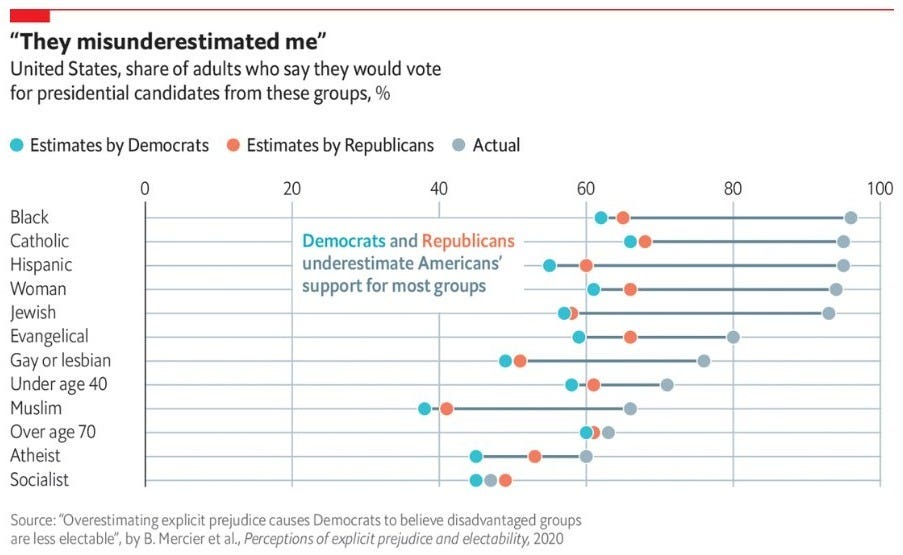
Americans tend to overestimate voters’ prejudices against women and ethnic minorities. Democrats are particularly prone to this - which ironically makes them less likely to support female or minority candidates due to concerns about electability.
2. The Myth That Women’s Health is Ignored
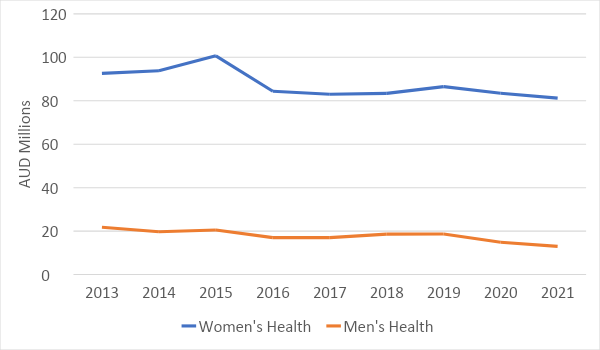
We’re often told that men’s health gets more funding and attention than women’s. Various datasets suggest, however, that it’s actually the other way round. The graph below, for instance, shows relative investment in women’s vs. men’s health in Australia over the last decade or so. Throughout that time, women’s health received considerably more funding than men’s.