

Welcome to the December 2025 edition of the N3 Newsletter Linkfest: a collection of links to papers and articles that grabbed my attention over the last month. In this edition, we’ll look at four famous psychological findings that turn out to be bunk, the latest research on intelligence and personality, and the nature and nurture of narcissism. And we’ll ask: Are human beings monogamous? Who’s more interested in aggressive pornography, men or women? And do self-improvement products really work?
You can access the complete collection of Linkfests here.
Sports Psychology
Swearing can increase strength and endurance. This may be because it induces disinhibition: a psychological state in which people don’t restrain their behavior. [Link.]
Social Psychology
Contrary to earlier claims, economic inequality doesn’t reliably reduce people’s subjective well-being or mental health. [Link.]
Exposure to poor people reduces rich people’s support for redistribution. [Link.]
People see discrimination based on unattractiveness as less objectionable than discrimination based on race or sex. This is partly because people are less concerned about attractiveness-based discrimination. But it’s also partly because people are less likely to notice it. Unlike racism and sexism, it’s just not on the radar. [Link.]
Media coverage of mass shootings inspires copycat killers. Researchers compared shootings that coincided with a natural disaster (and thus received less media coverage) to those that didn’t. Sure enough, when disasters crowded out coverage, subsequent shootings were less likely. [Link.]
Clinical Psychology
More than 90% of what anxious people worry about never happens. A famous quote from Mark Twain captures the dynamic well: “I’ve suffered a great many catastrophes in my life. Most of them never happened.” The good news is that confronting anxious people with the inaccuracy of their predictions seems to ease their anxiety. [Link.]
Evolutionary Psychology
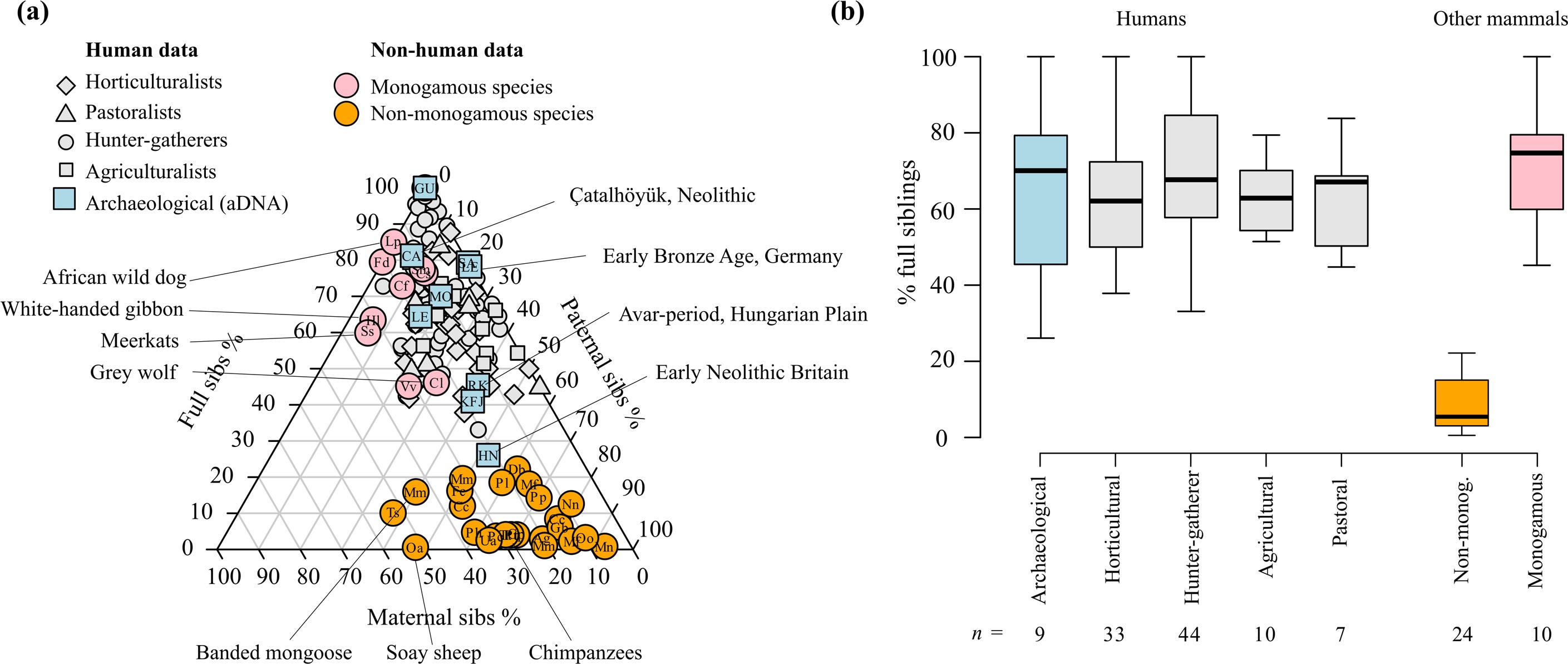
A fascinating new study asks how monogamous humans are compared to other mammals. The author looked at the relative frequencies of full siblings vs. half-siblings in a range of mammalian species, with a higher frequency of full siblings implying a higher level of monogamy. The verdict: Humans are quite monogamous - much more so than most other primates. We’re slightly more monogamous than meerkats, but slightly less monogamous than beavers. There’s some variation in levels of monogamy across cultures, but it all falls within the fairly monogamous range. These findings are consistent with an argument I make in my books The Ape That Understood the Universe and A Billion Years of Sex Differences, namely that although humans engage in a wide variety of mating relationships, pair bonding is by far the most common. [Link.]