



In Case You Missed It…
Welcome to the November 2026 edition of the N3 Newsletter Linkfest: a collection of links to papers and articles that grabbed my attention over the last month. On the menu today…
A striking example of “pretty privilege”
Psychology’s anti-masculinity bias
The all-too-human cognitive biases of our AI overlords
What happens when science journals endorse political candidates
One of my biggest pet peeves about psychology
The surprising truth about intelligence and happiness
The latest woke absurdities on campus
We’ll also ask: Could embryo selection combat mental illness? Will Islam soon be the largest religion in the world? And is Indigenous science really science?
Around a quarter of the items are free to read for everyone; the rest are for paid subscribers only. I tend to put the spicier content behind the paywall, so if you’ve got a high spice tolerance, consider becoming a paid subscriber.
You can access the complete collection of Linkfests here.
Revenge Is Sweet (But You Shouldn’t Do It Anyway)
A new meta-analysis concludes that revenge really is sweet: People tend to find it pleasurable. The pleasure fades, of course, but there’s little evidence for the common belief that taking revenge leaves a bitter aftertaste. Imagining revenge is more of a mixed bag, bringing both pleasant and unpleasant feelings. [Link.]
It Pays to Be Pretty
An analysis of a US online lending platform concluded that good-looking people are more likely to get a loan and pay lower interest rates than less attractive individuals with the same financial credentials. At the same time, good-looking people are more than three times as likely to fall behind on their payments. [Link.] HT Macken Murphy
Swiping for Dates vs. Swiping for Friends
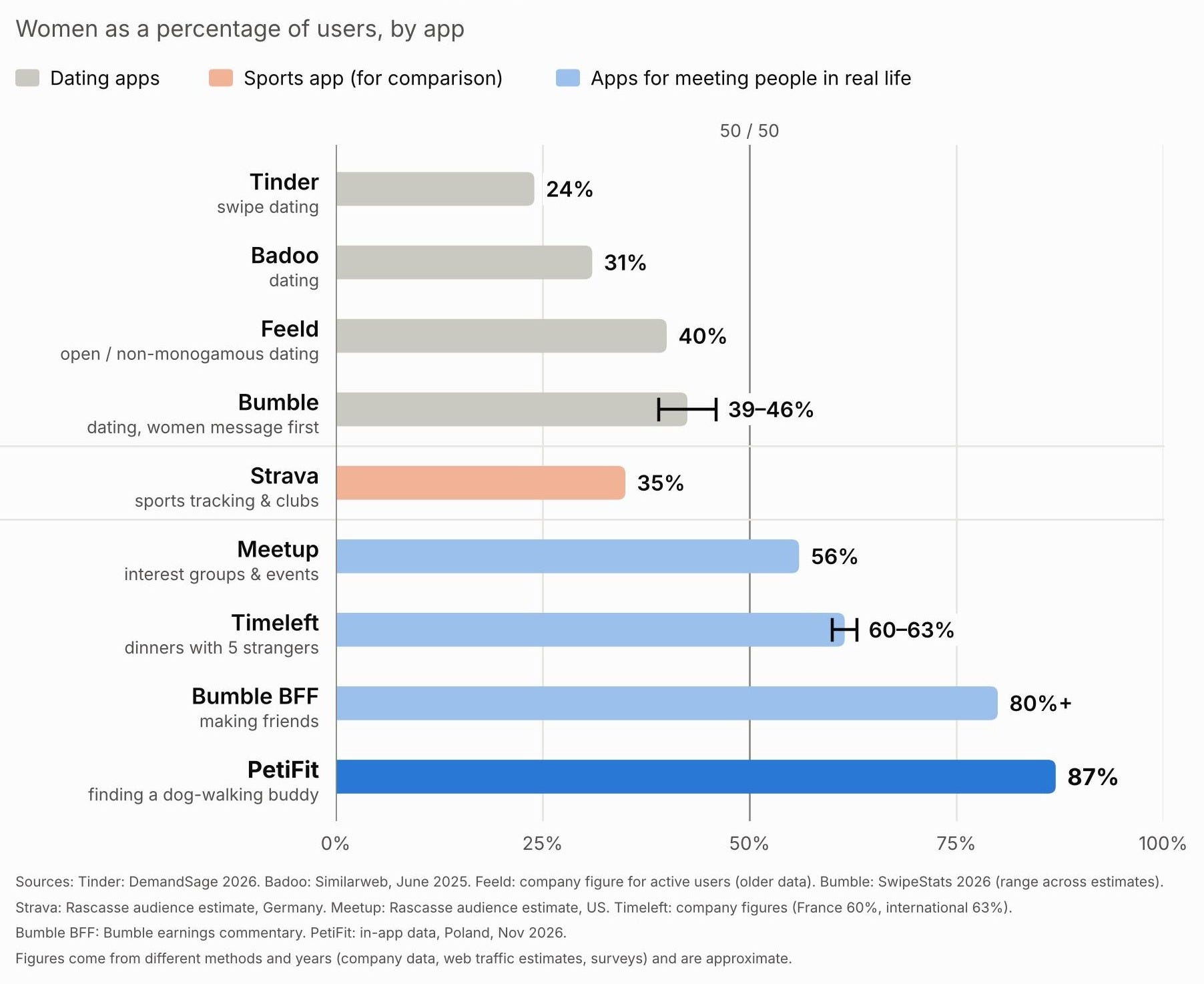
Men outnumber women on all the major dating apps shown in the graph below. Women, meanwhile, outnumber men on all the apps for making friends. The tidiest comparison concerns Bumble: Women make up around 40% of users on its dating app but around 80% on Bumble BFF. [Link.]
The Global Gender Gap in Education Has Reversed
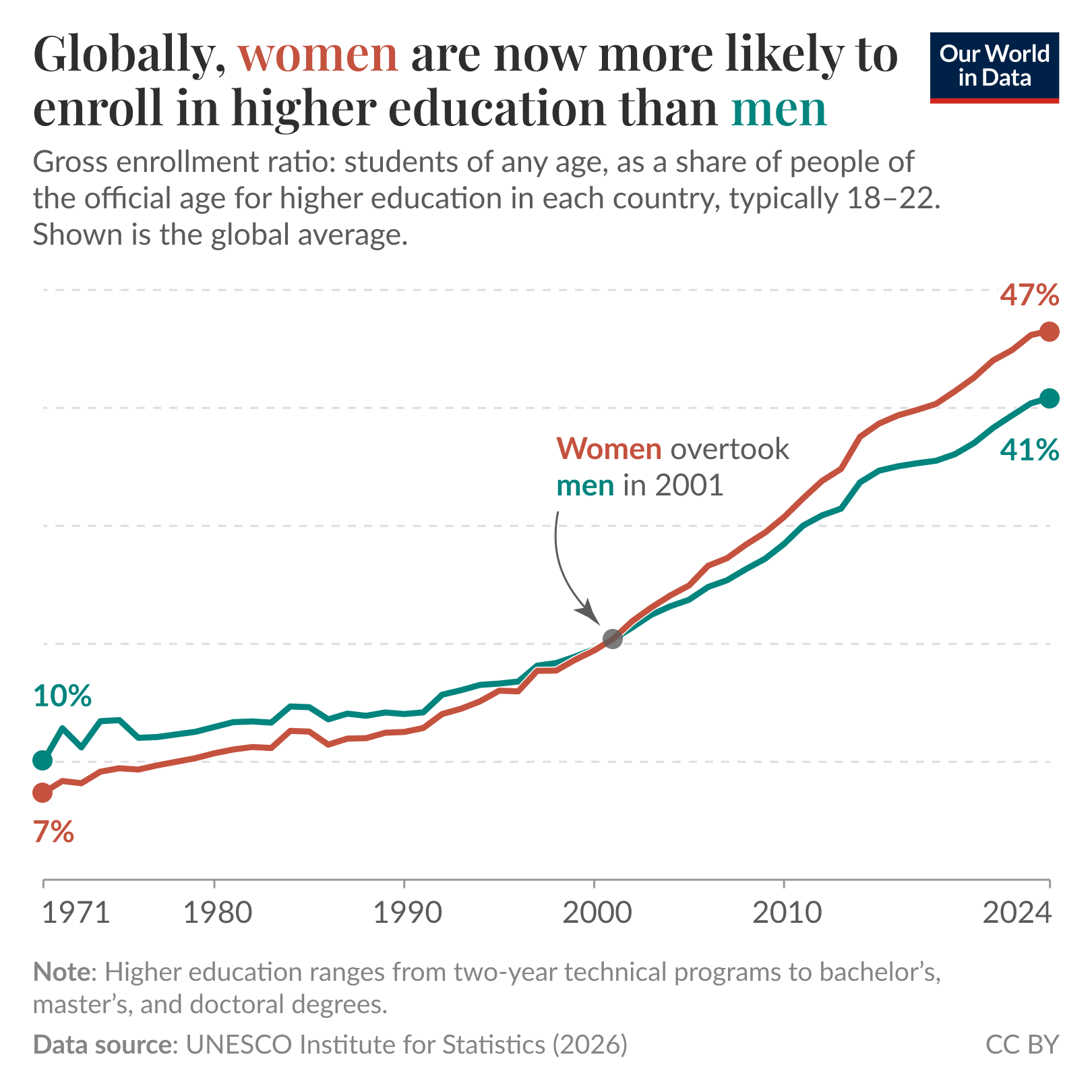
In 1971, the global enrollment rate in higher education was 10% for men and 7% for women. Women overtook men around the dawn of this century, and the gap has now doubled in the opposite direction (47% vs. 41%). Sub-Saharan Africa is the one major world region where men still have a higher enrollment rate than women. [Link.]
Psychology Measures Masculinity Mainly by Its Faults
If you learn about masculinity from psychology questionnaires, you might come away thinking that it’s mostly a list of things men do wrong. A review of 65 measures found that 78% took an approach focused on problems and shortcomings, while only 22% included elements designed to capture strengths. Does this say something about masculinity - or something about psychologists’ biases? [Link.]