


In Case You Missed It…
People Are Getting Tired of Discrimination - Even Against White Men
12 Things Everyone Should Know About Evolutionary Psychology
We often talk as if instincts arrive fully assembled, like apps preinstalled at birth. But even the most iconic, “hard-wired” behaviors have to be practiced and honed.
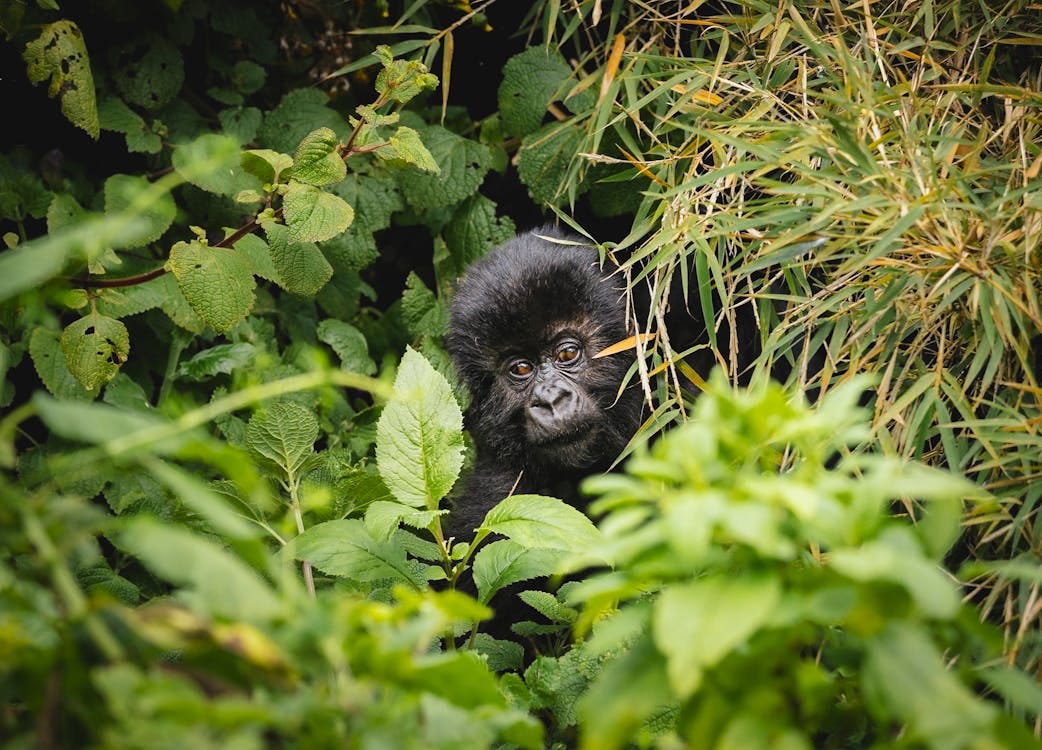
Exhibit A: This baby gorilla, earnestly attempting to beat his chest, only to discover that mastery - like evolution itself - proceeds by trial, error, and the occasional undignified tumble.
Here’s what I wrote about the role of learning in the development of adaptations in my book The Ape That Understood the Universe:
Why, though, do people think that, according to evolutionary psychologists, everything is down to genes? Part of the problem is the widespread assumption that, if a trait is an adaptation, it must therefore be a product of nature rather than nurture, genes rather than learning. This assumption is seductive but false. In many cases, learning is part of the developmental program that installs the adaptation. A good example concerns play-fighting in kittens. Play-fighting looks like fun. It is fun. But it’s also a serious business, because it helps the animal to develop its species-typical hunting and fighting skills. It’s easy to imagine genes that bias feline development in such a way that kittens are naturally inclined to jump around and play. These genes were presumably selected because jumping and playing stimulated the development and fine-tuning of the animals’ hunting and fighting skills. Thus, hunting and fighting are adaptations – they’re there because selection favored them - but they’re also partly learned. Learning plays a crucial role in many human adaptations as well, including kin altruism, incest avoidance, and language.
Update - 8 January 2026
A reader asked whether it’s fair to say that, while instinctive behaviors have to be learned, the desire to perform those behaviors is unlearned. Here’s my response:
As a first approximation, I think that’s probably right: Instinctive behaviors are learned as a result of unlearned instinctive desires.
It’s possible, though, that if we could a microscope to the neural underpinnings of the desires, we’d find that things aren’t quite so tidy. The initial desire could be quite vague and inchoate, and could itself be honed as the behavior starts to develop. In other words, the desire and the behavior may develop in concert with one another.
Logically, though, there must be some unlearned starting point, or the whole process could never get off the ground.
You can read the first chapter of The Ape That Understood the Universe for free here.
Follow me on Twitter/X for more psychology, evolution, and science.
Coming Soon to The Nature-Nurture-Nietzsche Newsletter…
Personality Change in the Teen Years
Why I’m Not a Fan of Gender
Sex Differences in Empathy Across Cultures
How You Can Support the Newsletter
This post was free to read for all. If you like what I’m doing with The Nature-Nurture-Nietzsche Newsletter, and want to support my work, there are several ways you can do it.
Like and Restack: Click the buttons at the top or bottom of the page to boost the post’s visibility on Substack.
Share: Send the post to friends or share it on social media.
Upgrade to Paid: A paid subscription gets you:
Full access to all new posts and the archive
Full access to excerpts from my book, A Billion Years of Sex Differences
Full access to exclusive content such as my “12 Things Everyone Should Know” posts, Linkfests, and other regular features
The ability to post comments and engage with the N3 Newsletter community
If you could do any of the above, I’d be hugely grateful. The support of readers like you helps keep this newsletter going and growing.
Thanks!
Steve
Related Reading From the Archive

12 Things Everyone Should Know About Evolutionary Psychology

This is the latest post in my “12 Things Everyone Should Know” series. You can access the full collection here.

Hi Steve. Watching the little gorilla it seemed to me that there were two factors displayed: 1) the desire/need/urge (!?) to perform the chest thumping and b) the physical competence required. Developing the second factor is something that all complex animals undergo: human infants require practice reliably to locate their thumb in relation to their mouth. But does the desire/need/urge need to be learned?
Hi Steve love your books and newsletter. Regarding instinctive behaviour, as a dog owner for decades, my current adorable Standard poodle’s latest friend is a gorgeous 4mo border collie who seems to have had the chasing and herding instinct ever since he has been allowed to play off the leash. With no parent around to teach him, it seems that the herding instinct is extremely instinctive - any thoughts
Best wishes Paul