

In Case You Missed It…
If you think that your belief is based upon reason, you will support it by argument, rather than by persecution, and will abandon it if the argument goes against you. But if your belief is based on faith, you will realize that argument is useless, and will therefore resort to force either in the form of persecution or by stunting and distorting the minds of the young in what is called “education.”
-Bertrand Russell
This is the latest post in my “12 Things Everyone Should Know” series. You can access the full collection here.
Whenever the topic of wokeness comes up, someone inevitably asks, “What do you mean by wokeness?” Sometimes, it’s a good-faith question. Other times, it’s an attempted conversation stopper: a way to insinuate that the term is just a meaningless right-wing slur. To be fair, some on the right do use it that way. Still, though the word has fuzzy boundaries, it clearly points to something real. And it’s important to talk about that something, because wokeness is the largest cultural shift that most of us have seen in our lifetimes.
Broadly speaking, wokeness is an extreme form of progressive politics, occupying the same region of conceptual space as political correctness, identity politics, and social justice. At its core is a moral framework that divides the world into oppressors and oppressed. The primary oppressors are White people, men, straight people, and cisgender people; the primary oppressed are people of color, women, and LGBT+ individuals. Woke or not, few deny that there’s still racism, sexism, and other forms of bigotry in the world. The distinctive claim of the woke, however, is that these things are utterly pervasive. The West is a White supremacist heteronormative patriarchy, suffused with White privilege, male privilege, systemic racism, microaggressions, and so on.
But wokeness isn’t just a diagnosis; it’s an approach to remaking the world. Its prescriptions include Diversity, Equity, and Inclusion (DEI) initiatives such as implicit bias training; efforts to shield people from upsetting ideas via safe spaces and trigger warnings; reverse discrimination in college admissions, hiring, and elsewhere; speech restrictions; and cancellation - that is, social or professional punishment for expressing views that, until recently, were well within the Overton window (for example, that there are two biological sexes).
In this installment of the 12 Things Everyone Should Know series, we’ll explore the psychological and sociological research on wokeness. We’ll look at sex and age differences in wokeness; whether wokeness elevates the risk of mental illness; whether its empirical claims stand up to scrutiny; whether its policies achieve their stated goals or make things worse; and whether wokeness is on the way out or ramping up.
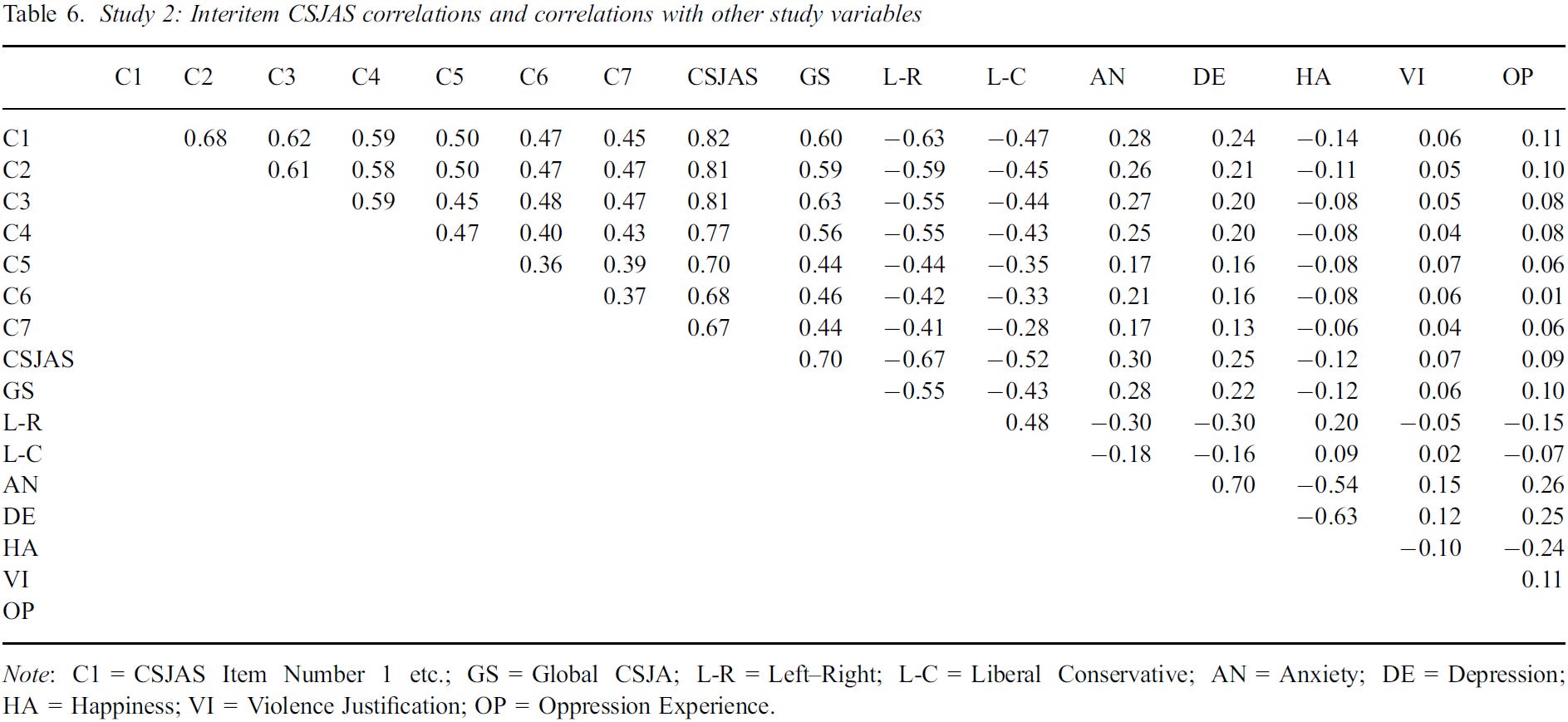
1. The woke worldview is associated with depression and anxiety
People who express higher agreement with woke ideas also tend to have higher levels of depression and anxiety. Do woke beliefs cause depression and anxiety, or do depression and anxiety make woke beliefs more appealing? At this stage, we don’t know - but it seems plausible that the causal arrow points in both directions.
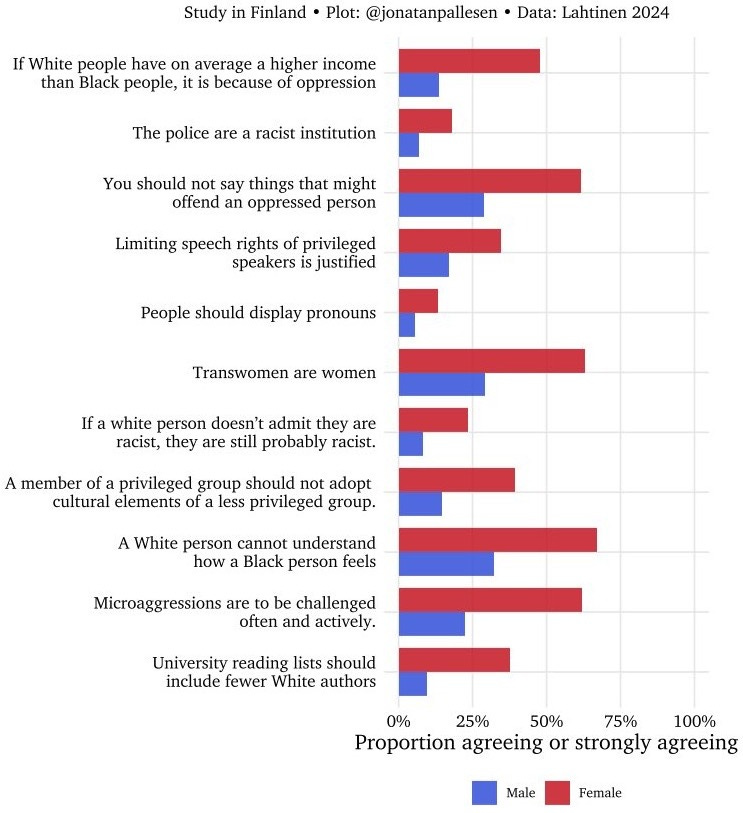
2. Women are more woke than men
Although woke beliefs are found in both sexes, they’re more common in women. To be clear, most women are not especially woke, any more than most men are. But among the minority who are woke, women outnumber men. Part of the reason may be that wokeness bills itself as a compassionate approach to the world, which is a stronger selling point for the average woman than the average man.